Home
Microsoft 365
Linux
Windows
Powershell
Cloud Computing
    Citrix Xendesktop
    Citrix XenApp
Useful links
About
  • Home
  • Microsoft 365
  • Linux
  • Windows
  • Powershell
  • Cloud Computing
    • Citrix Xendesktop
    • Citrix XenApp
  • Useful links
  • About
ajni.IT -
Coding•Linux

Automatic SSL certificate renewal with ZeroSSL API and Python 3

May 24, 2020 by AJNI 7 Comments

A while ago I wrote an article that described all the steps necessary to obtain a free SSL certificate with a validity of 90 days. Check it out: https://www.ajni.it/2019/06/claiming-a-free-ssl-certificate-for-your-website/

While it’s good to know how things work, the task gets boring and repetitive if you have to do it every 3 months and in my case for two different domains. This is why I wrote a small and straightforward script in Python3 that does that all for me.

ZeroSSL offers an API that allows us to automate this task by making some HTTP calls with an API key obtainable after registering.

I have uploaded the script on GitHub, check it out:

https://github.com/ajnik/ZeroSSL-CertRenew

There are some variables that must be changed:

  • Line 19: API key
  • Line 20: Domain name
  • Line 43 to 52: Request paramteres (O, OU, L, ST, C)

Execute the script with

python3 ZeroSSL_CertRenew.py

The script does no exception handling. I might improve it in the future.

Let me know if you have any suggestions. I am pretty new to Python programming so every tip is welcome.

Reading time: 1 min
Windows•Windows Client OS•Windows Server

Enabling DNS over HTTPS on common Web Browsers

April 1, 2020 by AJNI No Comments

What is DNS over HTTPS ? Well it’s basically an encrypted way of querying DNS. Normally DNS uses port 53 to communicate with the server and query the name we want. But all of that traffic is in plain-text and thus it is very easy to poison that communication. DNS over HTTPS is secure because it uses certificates to encrypt traffic (just like HTTPS websites).

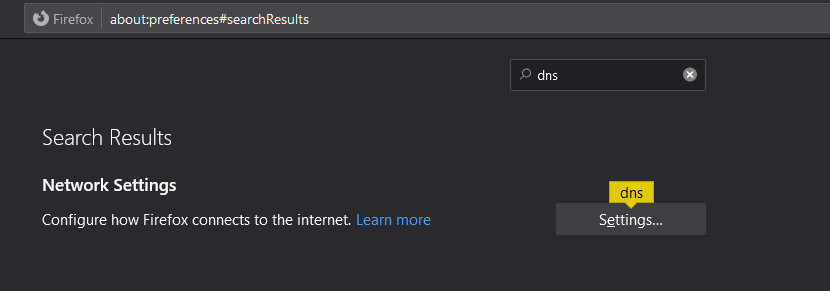
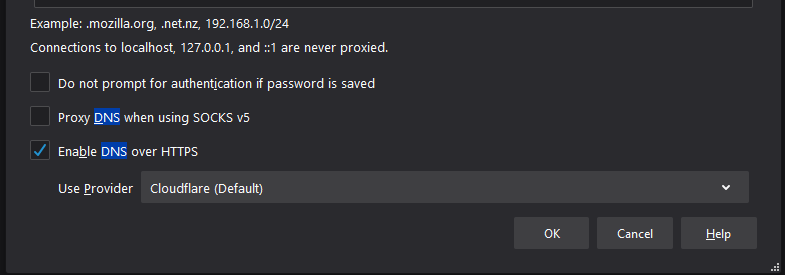
Mozilla Firefox makes it very easy to enable this feature. Just open the settings and search for “DNS over HTTPS”:

In the connection settings enable DNS over HTTPS. You could also add a custom provider. Here is a good list: https://github.com/curl/curl/wiki/DNS-over-HTTPS#publicly-available-servers

Microsoft Edge does not have a user-friendly way of activating the feature (yet).

In the edge://flags/ search for “DNS” and you will find the corresponding setting:

Unfortunately Microsoft Edge does not allow custom providers. Hopefully they will one day.

Reading time: 1 min
Cloud Computing•Linux•Virtualization

Installing OpenVPN on Ubuntu 18.04 Minimal

March 16, 2020 by AJNI No Comments

A few days ago I bought a very cheap Virtual Private Server (VPS) – check my post here: https://www.ajni.it/2020/03/quick-tip-cheap-private-servers-on-the-cloud/

It was very cheap (4$ or 3.75€ annually), but with a lot of gotchas.

One of them is Ubuntu 18.04 Minimal, which means a lot of packages will not be pre-installed, causing a lot of pain when installing services like in my example OpenVPN.

Here is how I managed to install OpenVPN on Ubuntu 18.04 Minimal.

Updating the system:

apt update

apt upgrade

Install OpenVPN

wget https://git.io/vpn -O openvpn-install.sh && bash openvpn-install.sh

The first problem occurs with the root CA certificates:

Install the root certificates in order to trust them:

apt-get install ca-certificates

After re-running the command, another error shows up:

Install the next package (iptables):

apt-get install iptables

And finally, the OpenVPN setup can be run:

I had to set a custom port, because only specific ones were NAT’d to my server. You might leave the port to default. I am also using 1.1.1.1 for DNS.

After the setup is finished, a configuration file will be created. This file contains the public certificates and private key that are mandatory for the connection. It can be imported into the OpenVPN client (Windows) through the GUI.

On Linux, a simple

openvpn configfile.ovpn

does the trick.

If you are looking for a VPS with good performance, check out Evolution Host at https://evolution-host.com/vps-hosting.php.
They offer virtual servers starting at 5€ per month.

Reading time: 1 min
Cloud Computing•Linux•Virtualization

Configure SSH Key-Based Authentication on a Linux System

March 10, 2020 by AJNI No Comments

By default, Linux systems allow both password-based and key-based authentication over SSH. If you have a server with SSH open to the world, password-based authentication shouldn’t be allowed at all.

To disable password-based authentication, edit the SSH config file:

nano /etc/ssh/sshd_config

Add the following lines:

PasswordAuthentication no

PubkeyAuthentication yes

Now generate a new private/public key pair:

ssh-keygen

id_rsa is your private key

id_rsa.pub is the public certificate thumbprint that must be added to ~/.ssh/authorized_keys

nano ~/.ssh/authorized_keys

The SSH service must be restarted.

service ssh restart

Now you can connect to your server with key-based authentication only. If connecting from a Linux system the file’s permissions must be set to 600.

chmod 600 id_rsa

ssh -i id_rsa ip@username

If you like using Putty, you’ll have to load the file with PuttyGen and save the private key as .ppk.

PuttyGen can be downloaded here: https://www.chiark.greenend.org.uk/~sgtatham/putty/latest.html

Links:

https://askubuntu.com/questions/346857/how-do-i-force-ssh-to-only-allow-users-with-a-key-to-log-in

Reading time: 1 min
Cloud Computing•Linux•Virtualization

Cheap private servers on the Cloud

March 9, 2020 by AJNI No Comments

Today I stumbled upon this very useful site that helps you find very cheap virtual private servers (VPS) around the globe. The public IPv4 address is shared and NAT’d across multiple servers. If that’s no problem for you, the cheapest servers are 0.15€ a month with 128MB RAM and 1 vCPU.

Also, some public IP addresses are blocked in China and/or Russia.

Have fun!

https://www.serverhunter.com/

Reading time: 1 min
Page 22 of 24« First...1020«21222324»

Like what you are reading? Buy me a coffee.

Tip Of the Day

  • OneDrive Error 700003 when trying to log in

    4 days ago

Keep in touch

Oh hi there!
It’s nice to meet you.

Sign up to receive awesome content in your inbox, every month.

Check your inbox or spam folder to confirm your subscription.

Categories

  • AI & Deep Learning (1)
  • Azure (20)
  • Citrix XenApp (21)
  • Citrix Xendesktop (13)
  • Cloud Computing (40)
  • Coding (1)
  • Hyper-V (10)
  • Linux (8)
  • Microsoft 365 (27)
  • Powershell (22)
  • Security (7)
  • VDI (16)
  • Virtualization (21)
  • VMware (12)
  • Windows (21)
  • Windows Client OS (41)
  • Windows Server (94)

Archives

  • December 2025
  • August 2025
  • May 2025
  • April 2025
  • February 2025
  • January 2025
  • December 2024
  • November 2024
  • October 2024
  • September 2024
  • July 2024
  • June 2024
  • May 2024
  • April 2024
  • March 2024
  • February 2024
  • January 2024
  • December 2023
  • September 2023
  • August 2023
  • July 2023
  • June 2023
  • April 2023
  • March 2023
  • January 2023
  • December 2022
  • November 2022
  • October 2022
  • September 2022
  • August 2022
  • July 2022
  • June 2022
  • May 2022
  • February 2022
  • January 2022
  • December 2021
  • November 2021
  • October 2021
  • September 2021
  • August 2021
  • June 2021
  • May 2021
  • April 2021
  • March 2021
  • February 2021
  • December 2020
  • November 2020
  • September 2020
  • August 2020
  • July 2020
  • June 2020
  • May 2020
  • April 2020
  • March 2020
  • February 2020
  • November 2019
  • October 2019
  • September 2019
  • August 2019
  • July 2019
  • June 2019
  • May 2019
  • April 2019
  • March 2019

ajni IT © 2019